Bod TV Series History is one of the most fascinating chapters in British children’s television, stretching back to the early 1970s when simple animation first captured the hearts of young viewers. The show introduced a minimalist visual style and gentle storytelling that felt entirely unlike anything else on screen at the time. Few animated series from that era have maintained such lasting cultural relevance, making this a story well worth exploring in depth.
Bod TV series history: origins and early broadcast
Understanding where this show began reveals just how unconventional its creation truly was. The series drew from a children’s book series by Joanna and Michael Cole, translating flat illustrations into moving images with remarkable faithfulness to the source material.
The books that started everything
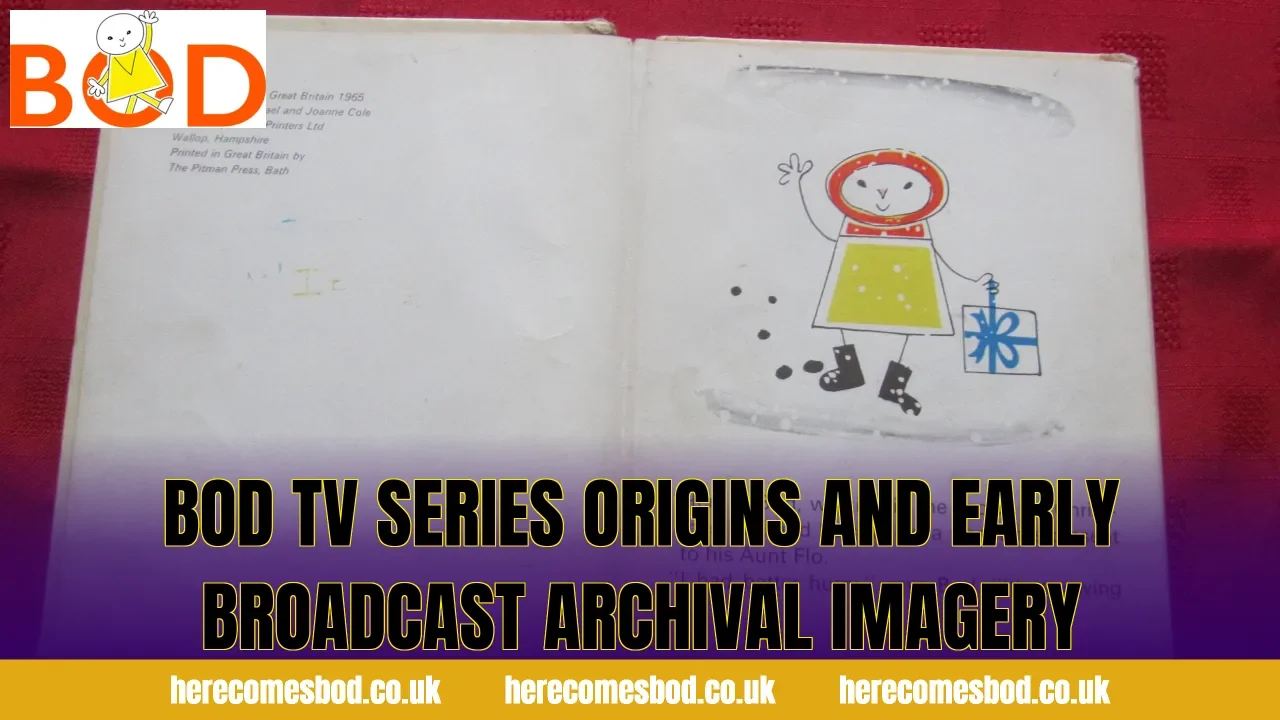
The Bod TV series history cannot be told without acknowledging the original picture books published in the late 1960s. Joanna Cole wrote simple, warm stories featuring a small child named Bod, surrounded by a cast of recurring adult characters with equally memorable names. These books were beloved in British households long before television came calling, giving the adaptation a ready-made audience from the very beginning.
How the BBC brought Bod to life
The BBC commissioned the animated adaptation in the early 1970s, with the series first airing in 1975 as part of the channel’s children’s programming block. The production team made a deliberate choice to preserve the books’ stripped-back visual aesthetic, using flat colors and minimal background detail. This decision gave the show its unmistakable look, one that felt both timeless and refreshingly honest compared to more elaborate cartoons of the same period.
Bod TV series history: cultural impact on television
The show’s influence extended well beyond its original broadcast run, shaping how British television approached children’s animation for years afterward. Its success demonstrated that restraint could be a creative strength rather than a limitation.
Redefining minimalism in animation
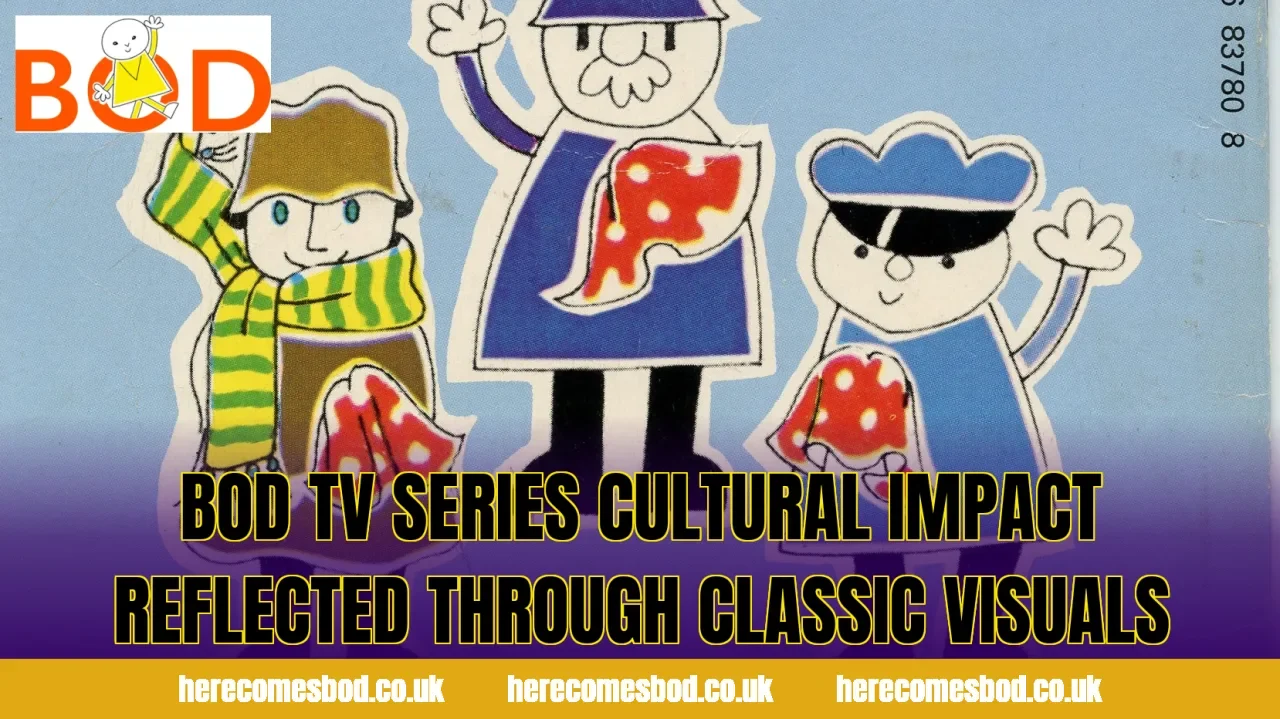
The Bod TV series history stands as an early proof of concept that animation did not need elaborate production budgets to leave a lasting impression. The character designs were deliberately simple, with Bod wearing the same yellow outfit in every episode and the supporting cast equally consistent in their appearance. This visual consistency became a form of comfort for young viewers, who knew exactly what to expect each time the opening sequence appeared on screen.
Critical reception across the decades
Critics who revisit the series today often remark on how well it has aged compared to more technically ambitious productions from the same era. The Bod TV series history includes multiple repeat broadcasts over the decades, each introducing the show to a new generation of viewers who responded to it with the same warmth as their parents had. This multi-generational appeal is genuinely rare in children’s television and speaks to the enduring quality of the original creative vision.
| Year | Milestone | Significance |
|---|---|---|
| Late 1960s | Original Bod books published | Established the characters and visual style |
| 1975 | First BBC broadcast | Introduced the animated series to British audiences |
| 1980s | Repeat broadcasts | Reached a second generation of young viewers |
| 1990s–2000s | Home video and VHS releases | Extended the show’s reach beyond broadcast television |
| 2010s–present | Digital streaming availability | Introduced the series to modern audiences worldwide |
What made Bod different from other cartoons
Comparing this series to its contemporaries reveals just how deliberately unconventional its creative choices were. Where other animated shows competed for attention through bright colors and fast-paced action, this one moved at its own quiet rhythm.
Storytelling rooted in everyday moments
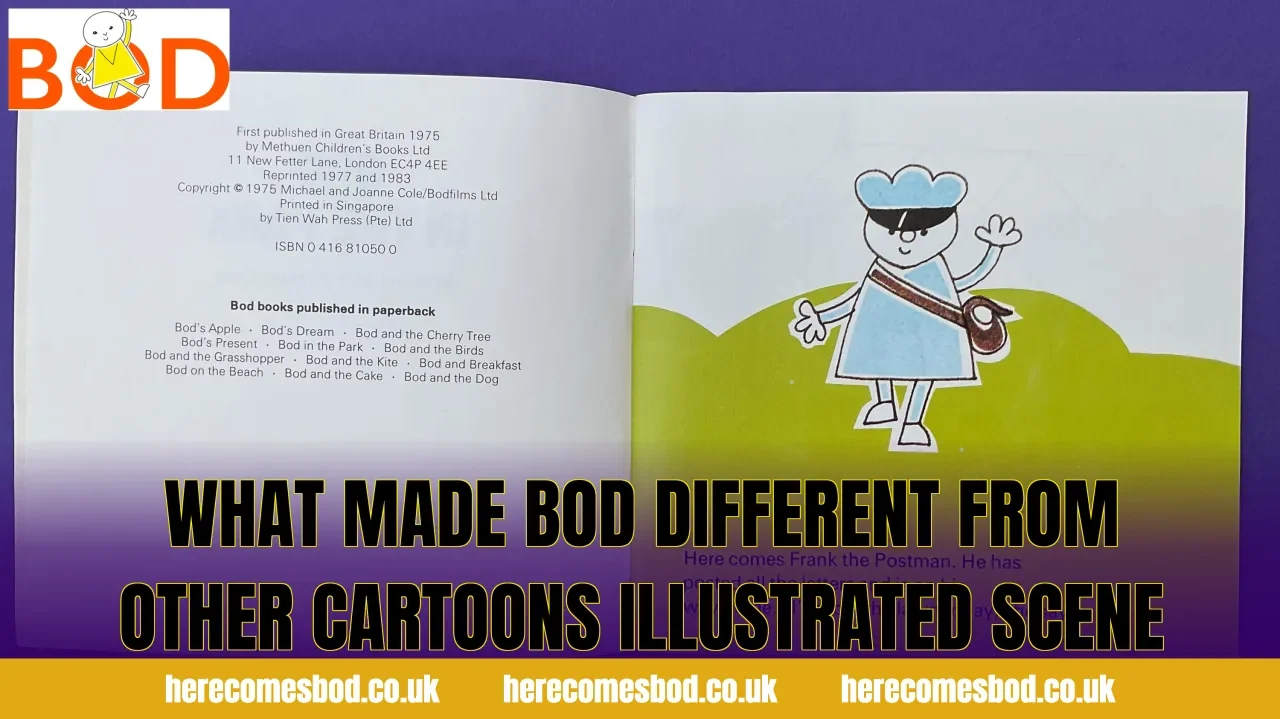
Each episode of the Bod TV series history focused on small, relatable moments from childhood rather than dramatic adventures or conflict-driven plots. A visit from a friend, a walk through the countryside, or a simple shared meal formed the backbone of most stories. This grounded approach made the show feel genuinely connected to children’s real experiences, which is a quality that flashier productions often sacrifice in the pursuit of excitement.
Character design as emotional shorthand
The supporting cast, including Aunt Flo, PC Copper, Farmer Barleymow, and Alberto Frog, each had visual designs so distinct that viewers could identify them instantly without any introduction. This economy of design meant that the show could spend its limited runtime on story rather than exposition, trusting the audience to remember who each character was from one episode to the next. The Bod TV series history is, in many ways, a masterclass in how thoughtful character design can carry an entire narrative framework.
Legacy and modern rediscovery of the series
The show’s journey from 1970s BBC broadcast to modern streaming platform is a story about how quality content finds its audience in every era. Nostalgia has played a role, but so has genuine artistic merit.
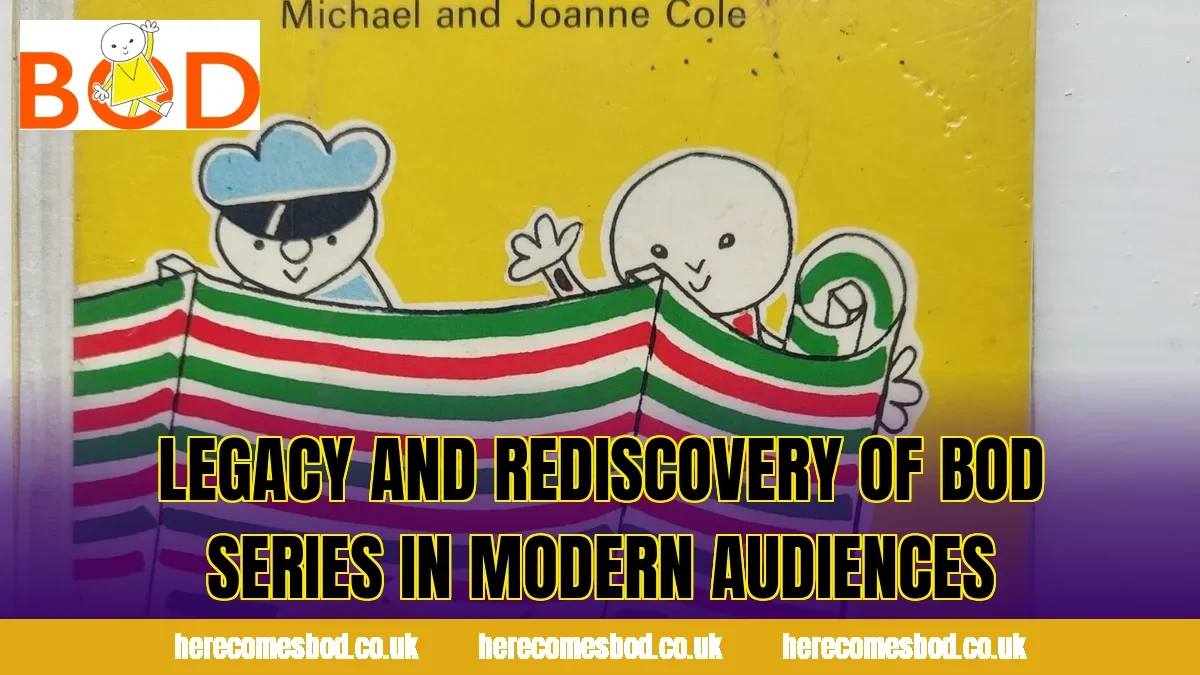
Nostalgia as a cultural force
For many British adults, revisiting the Bod TV series history through streaming platforms or DVD collections is an emotionally resonant experience that connects them to specific childhood memories. The show triggers a particular kind of nostalgia because it was so gentle and consistent, offering the same quiet world every time a child sat down to watch. This emotional attachment has helped sustain interest in the series long after its original broadcast window closed, keeping it relevant in cultural conversations about classic British animation.
Academic and archival recognition
Media scholars studying British children’s television have increasingly recognized this series as a significant artifact of 1970s broadcasting culture. Its preservation in the BBC archives and its inclusion in retrospectives about the history of British animation speak to how seriously the creative community now regards its contribution. The Bod TV series history is no longer just a fond memory but a documented part of the country’s cultural heritage, cited alongside other landmark productions from the same era.
Why new audiences still connect with it
Parents who share the series with their own children today often find that the show’s appeal translates across generations with surprising ease. Children raised on fast-paced digital content sometimes respond to its quietness with genuine curiosity rather than impatience, drawn in by the clarity of the storytelling and the warmth of the characters. The Bod TV series history continues to find new viewers precisely because its core values, kindness, simplicity, and honest storytelling, are not tied to any particular decade or technology.
Kết luận
Bod TV series history represents a genuinely important chapter in the story of British children’s television, one that rewards both nostalgic revisiting and fresh discovery. The series proved that restraint, warmth, and honesty could build a legacy that outlasts far more elaborate productions. Explore more about the world of Bod and discover why this quiet little show continues to matter so much to so many people.
Xem thêm: Bod Character Guide – Everything You Need to Know